Larson Woodland – Where Nature and History Intersect

Although only four acres in size, Larson Woodland sits at a strategic location, in a dense neighborhood, across from an elementary school, and next to a dam on the Ten Mile River whose flow had once powered a nearby cotton mill.

Autumn view of the dam at Mechanics Pond, 2008.

Great blue heron, 2014.

In 2019, Ben Cote led a guided walk along the Ten Mile River, stopping here in Larson Woodland.

Snapping turtles lay their eggs on Sandy Point.    Image credit: David Laferriere

Fishing at Sandy Point, Larson Woodland, 2009.

Swan, Mechanics Pond, 2009.

Tufted Titmouse, Larson Woodland, 2007.

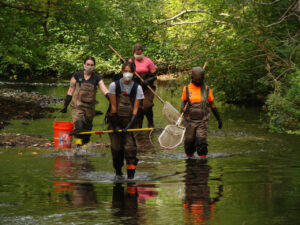
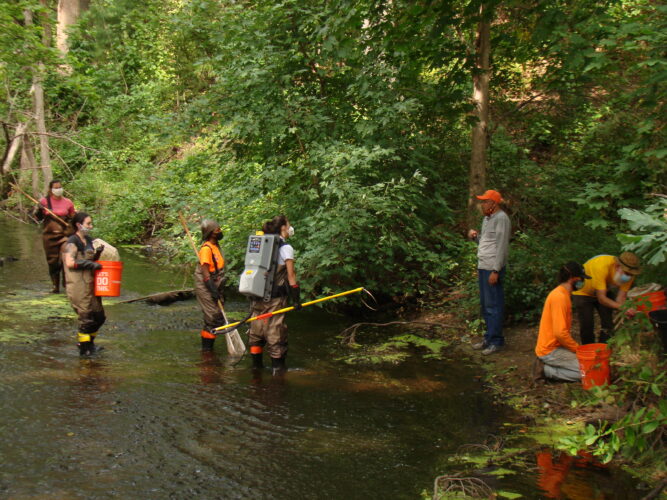
Fish census, 2020.

Large mouth bass

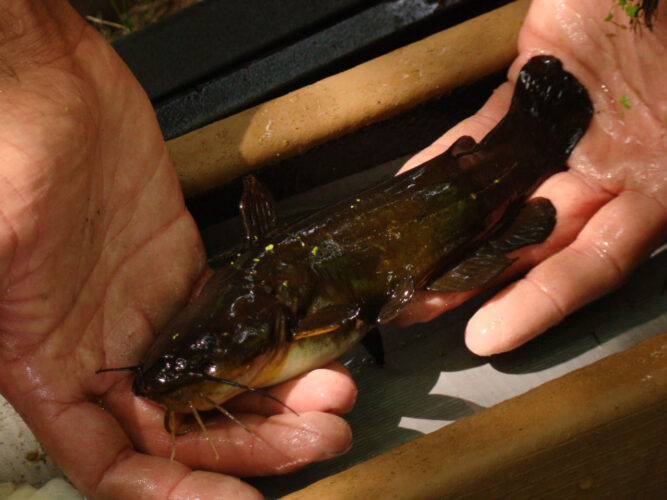
Yellow Bullhead Catfish

In Memoriam: Ray Larson

Ray and Muriel Larson, 2009

The Attleboro Land Trust mourns the passing of Ray Larson on February 9.  Larson Woodland was donated to the land trust by Ray in 1997 and formally dedicated at a ceremony held on October 31, 1999, with Congressman Jim McGovern in attendance.

The dedication read as follows:

“The gift of Larson Woodland comes from a man with deep roots in Attleboro and a faith in our city’s future.  Ray Larson has made this neighborhood home for his entire life.  By preserving this precious piece of landscape, Ray and his wife Muriel have ensured that all future visitors to this area will be able to experience the same sense of place, the same sense of continuity which they have known.

“This property is dedicated to all of the children who have trod its riverbanks on the way to school at Willett and St. John’s, to all the workers who have passed this way enroute to the Watson mill buildings, and to all the residents who have lived in the shadow of these tall trees.

“In this place where the power of the Ten Mile River was once harnessed to sustain industry, a member of the city’s industrial community has made a gift that will help us to sustain the river.  May all who come here appreciate this gift, enjoy this place, and help to take care of it.”

Congressman Jim McGovern with Muriel and Ray Larson at the dedication of Larson Woodland.

ALT members and friends at the Larson Woodland dedication in 1999.

Don Doucette, Devoted Steward of Our Watershed

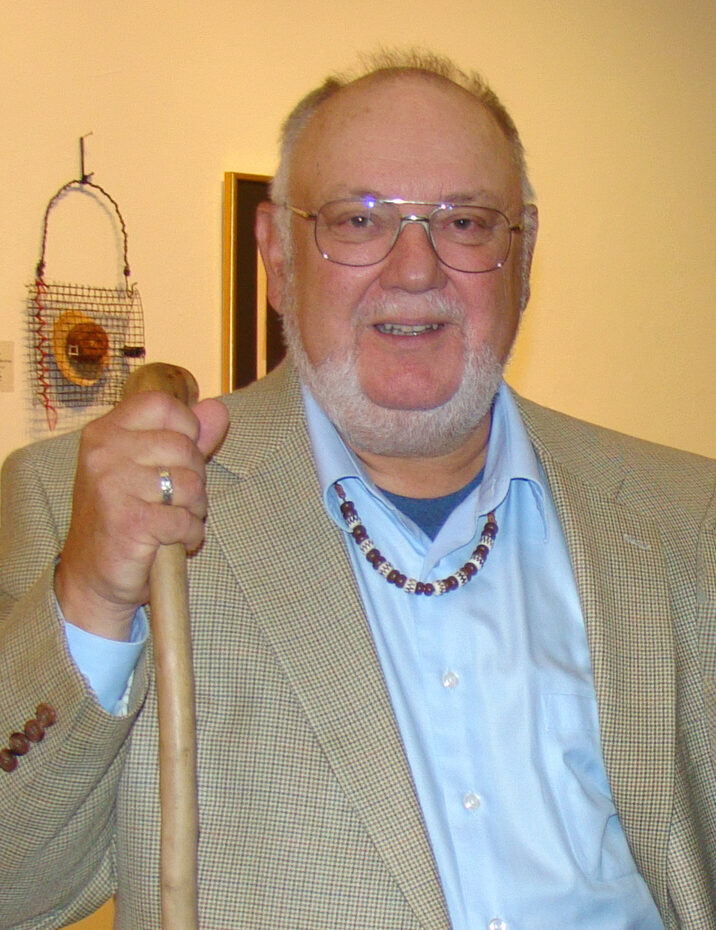
Don Doucette at the 2011 Attleboro Land Trust Annual Meeting.

Don Doucette, long-time advocate of watershed conservation, passed away on May 9.  Don was devoted to the preservation of our local environment and its history.  He was a founding member of the Ten Mile River Watershed Alliance (TMRWA) in 1990, and he with his wife Nancy were early members and supporters of the Attleboro Land Trust, which was founded that same year.

A partnership between the two organizations resulted in the donation of Larson Woodland to the land trust by Ray Larson in 1997.  Don played a key role in that acquisition.  Earlier, in 1996, the TMRWA had dedicated a 3-mile urban trail beginning at Balfour Riverwalk Park and following the Ten Mile River upstream as far as West Street.  A guide to the Ten Mile River Heritage Trail, written by Don, described historic stopping points along the route.
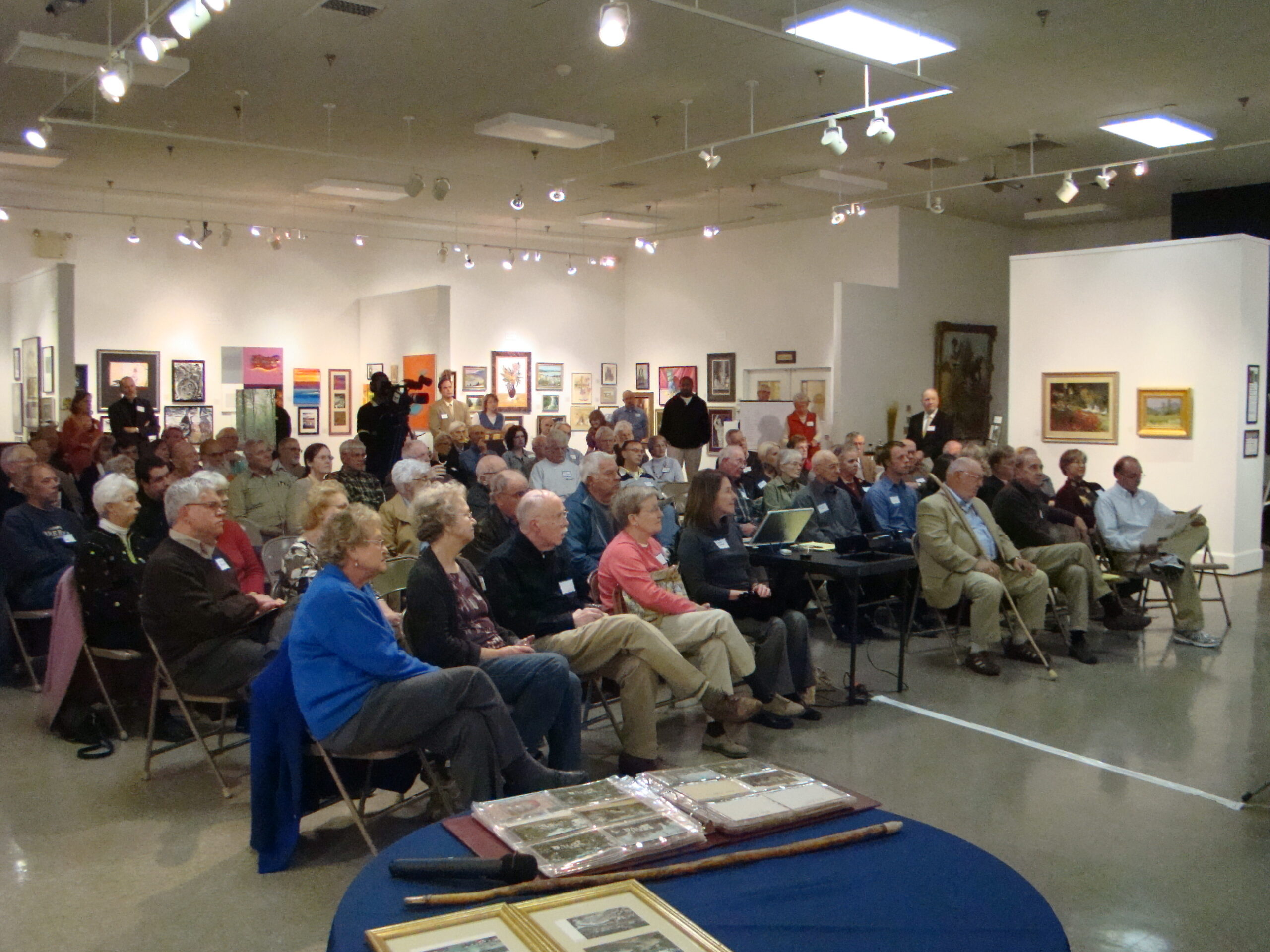
2011 Attleboro Land Trust Annual Meeting.

One of the land trust’s most memorable annual meetings was in 2011, when Don was our keynote speaker.   His talk, “The Ten Mile River Watershed:  A Walk Through Time,” was accompanied by a stunning slide show consisting of mostly of postcards he had collected of scenes photographed up and down the Ten Mile during the early decades of the twentieth century.  Don’s authoritative grasp of his subject reflected not only painstaking research, but the fact that, with fellow TMRWA member Mark Benoit, he had trekked the entire 27-mile length of the river, from Plainville to East Providence, in 2 days in 1995.
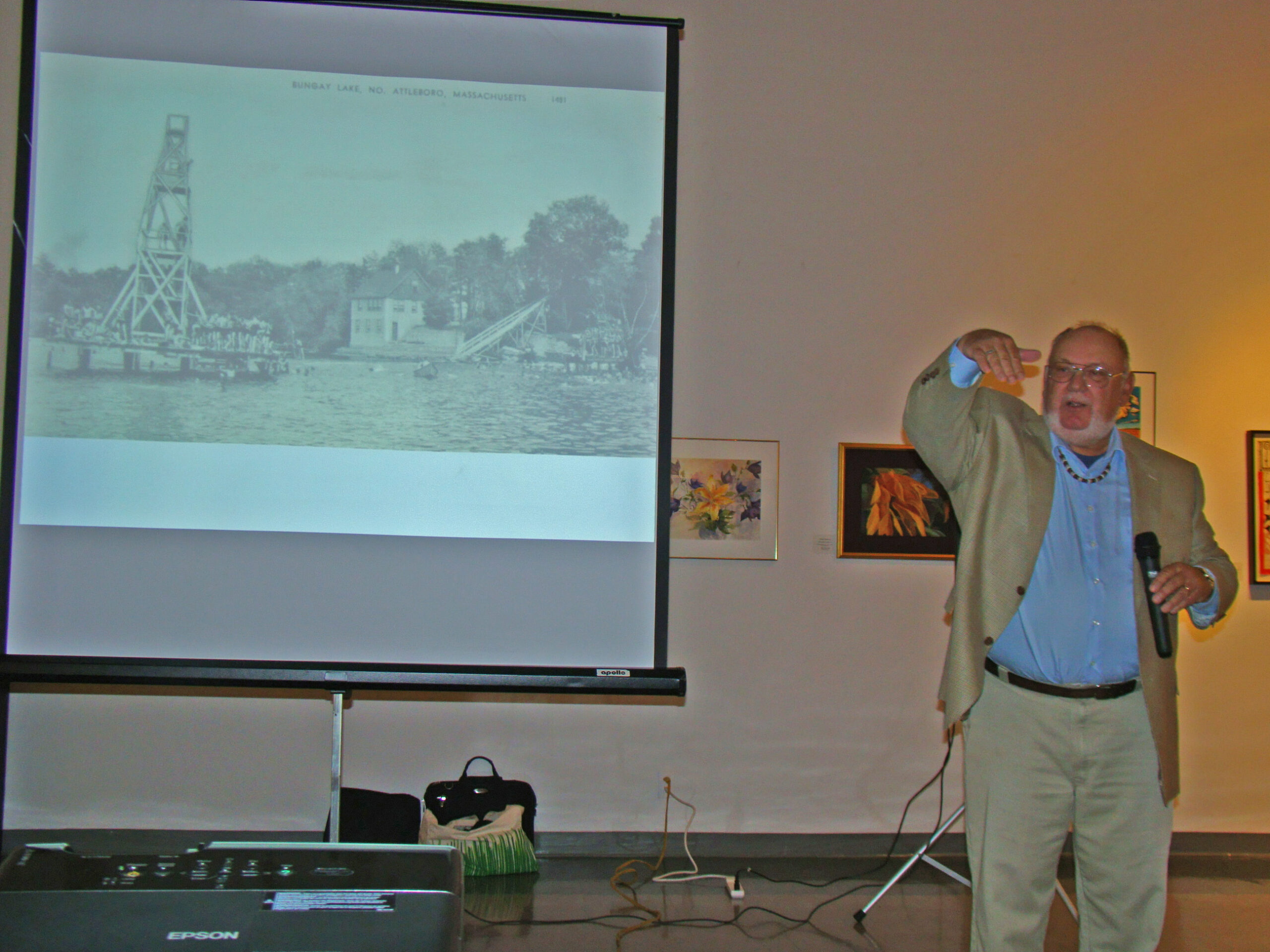
Keynote speaker Don Doucette at the 2011 Attleboro Land Trust Annual Meeting.

Of his motive, Don wrote, “The primary intent was adventure–to cross, as does water, all human imposed, social and physical bounds that tend to fragment the Ten Mile River Watershed. Envisioned was a more intimate encounter with the river–we were not disappointed.”


Many Hands Make Light Work at Fall Clean-Up

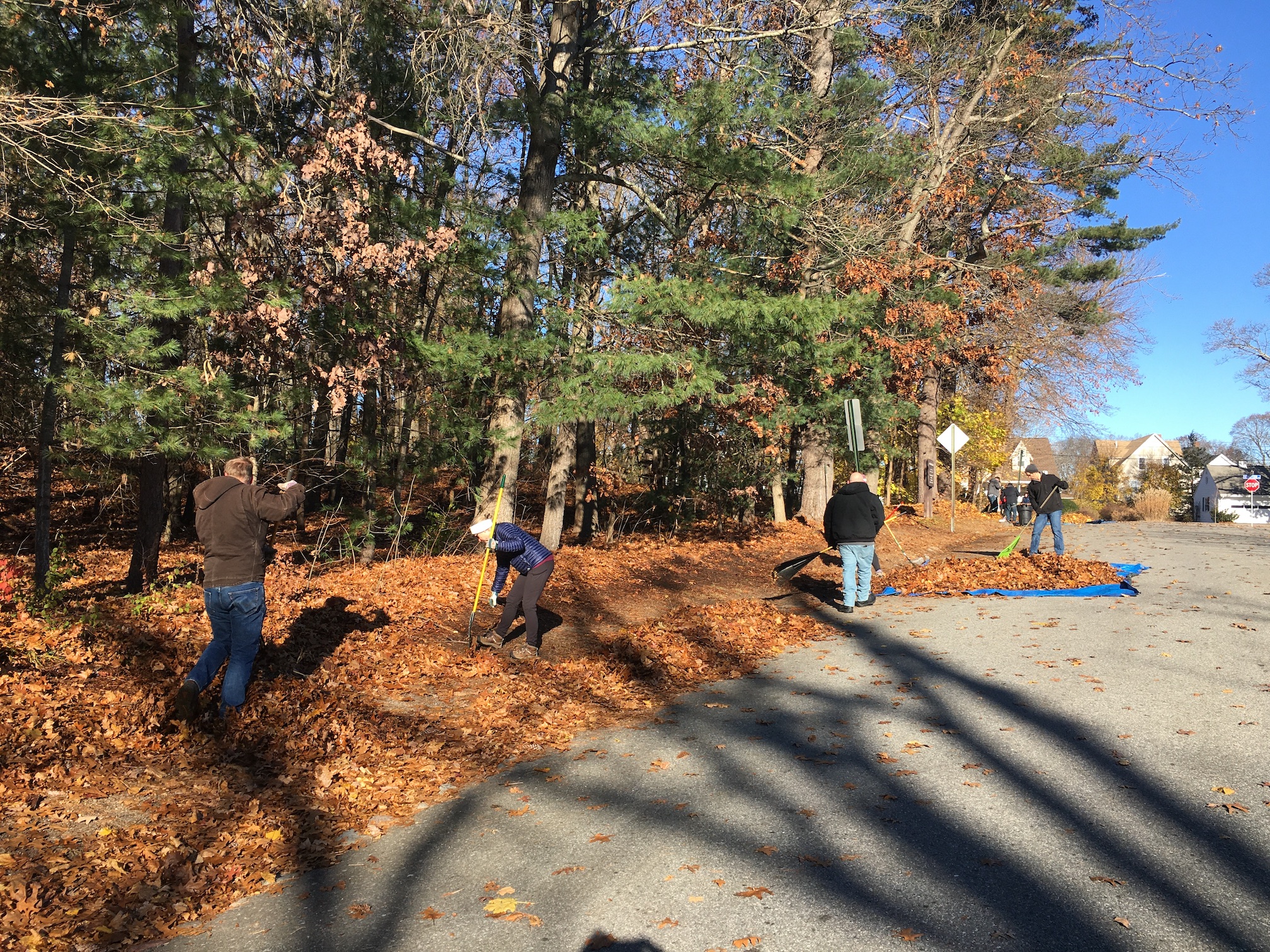
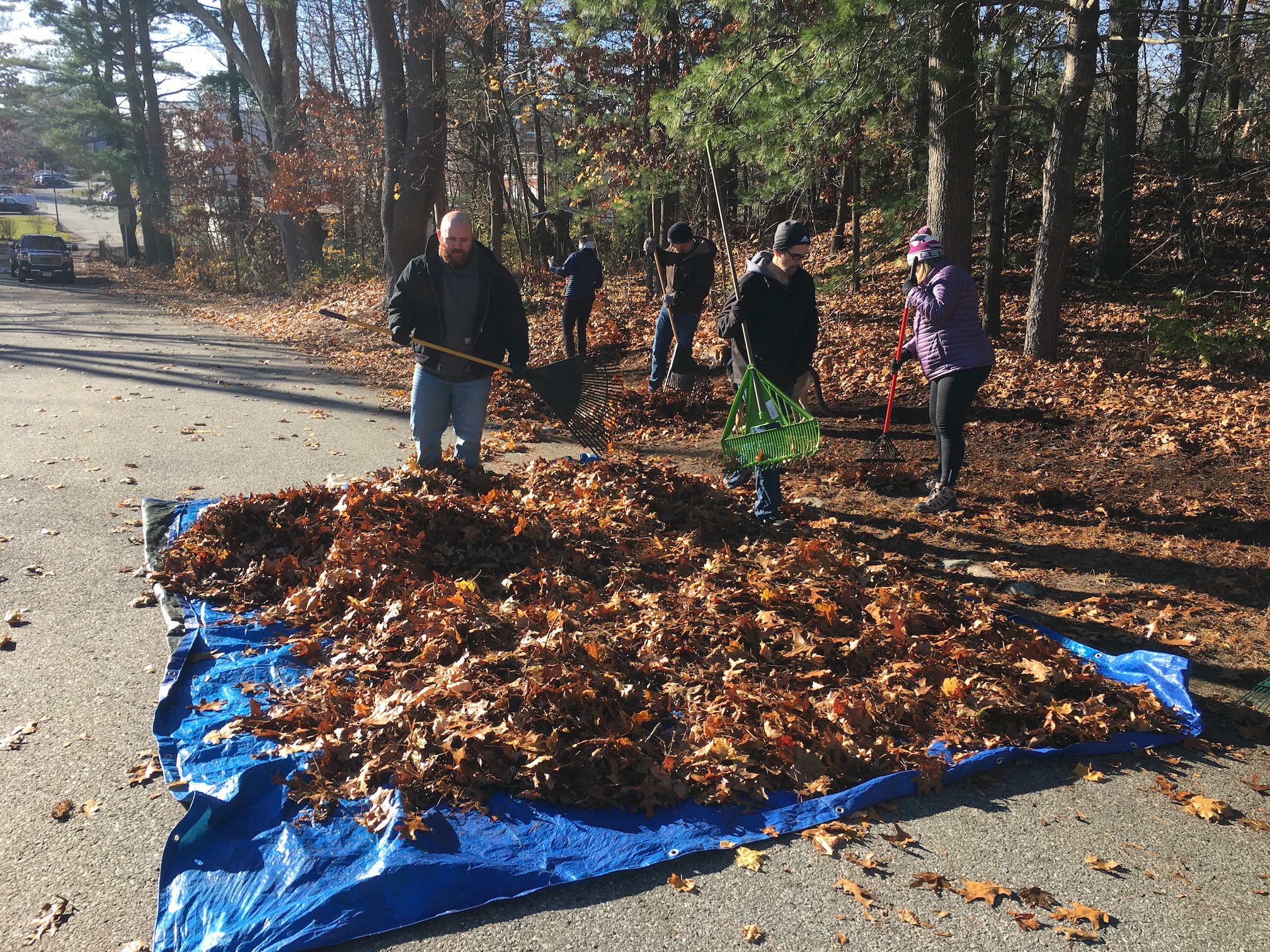
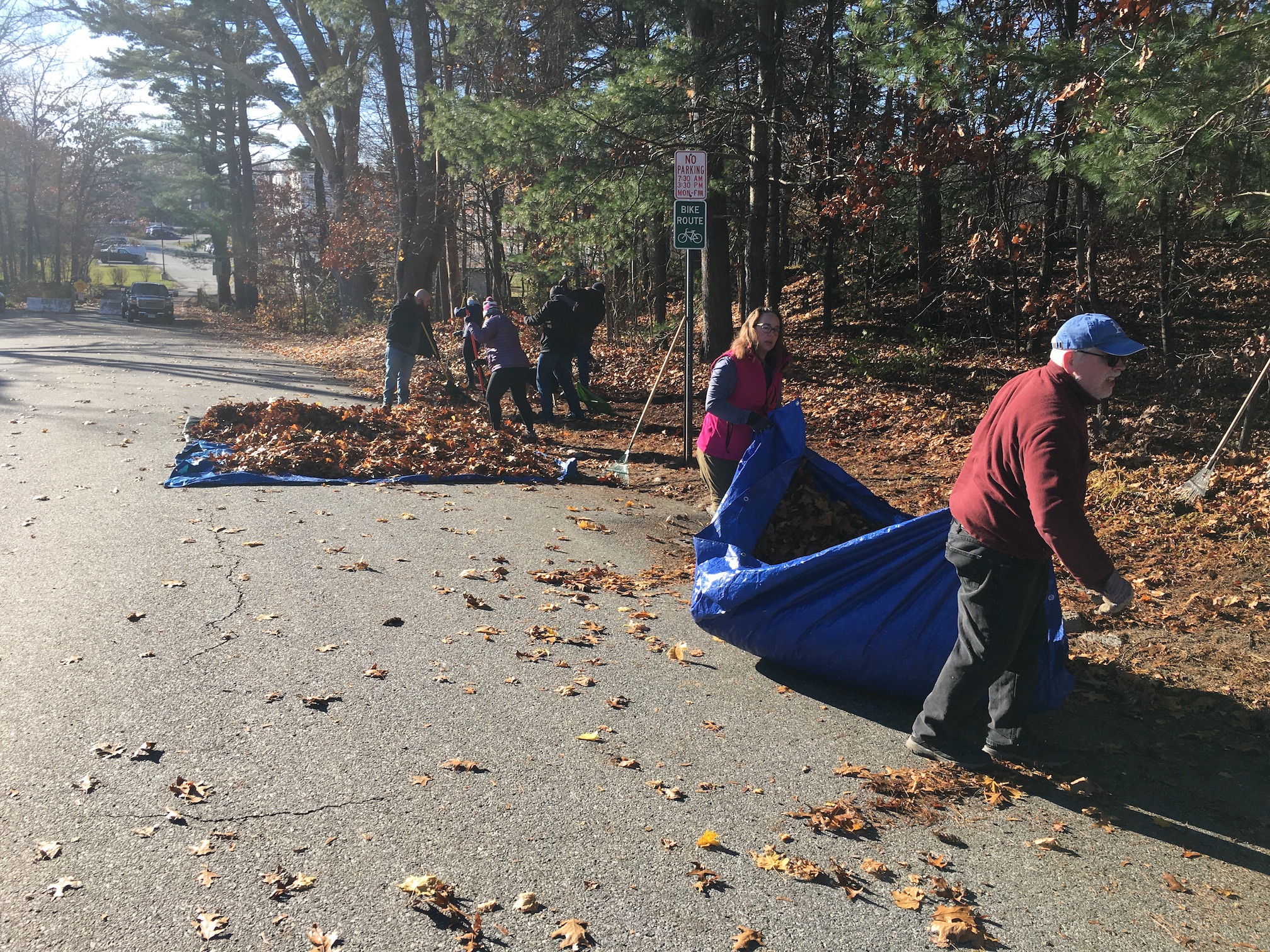
Every year the edges of Larson Woodland are piled high with the leaves dropped from the trees along Riverbank Road and Watson Avenue.  It takes a lot of effort to rake them up and move them away from the old stone curb, so that pedestrians can walk along the edge of the woodland.

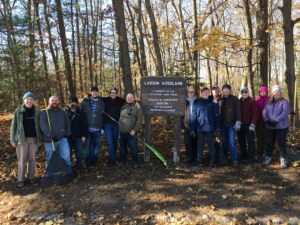
On Saturday, Nov. 25, we had an outstanding crew of site stewards and other volunteers helping with this effort, including seven members of the Ezekiel Bates Lodge of Attleboro.  The Lodge has been partnering with the Attleboro Land Trust as a site steward of Larson Woodland since 2014.

Volunteers Rake While the Sun Shines at Larson Woodland

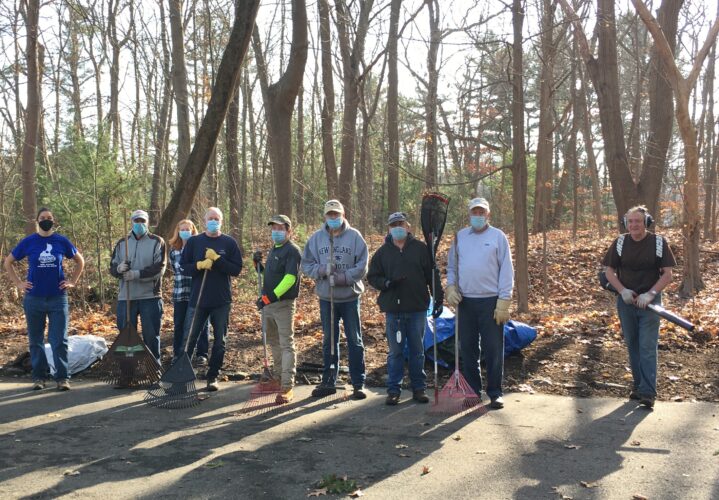
It is impossible for the edge of Larson Woodland on Riverbank Road to absorb the huge amount of leaves that fall each year.  It takes a crew of volunteers to rake and remove the leaves in order to keep the edge of the woodland walkable.  Fortunately, a great group of volunteers answered the call on Friday, December 11, and the job was done.  The leaves were used to help control erosion on a slope facing the Ten Mile River.

Thanks to everyone who helped in this annual effort.

Fishing for Answers at Larson Woodland

Staff and volunteers from the Woonasquatucket River Watershed Council in Rhode Island paid a visit to the Attleboro Land Trust’s Larson Woodland on September 17 to take a census of fish species in the Ten Mile River.  They came at the invitation of Keith Gonsalves of the Ten Mile River Watershed Council.  Keith has long been concerned about the health of the river and its inhabitants and has been arranging these scientific surveys annually for a number of years to monitor the river’s condition.

Volunteers helped collect the fish, using a device which temporarily stuns the fish with a slight electric shock.  The fish are counted and measured, then returned unharmed to the river.
 

In this video clip, ranger Jacob Gorke measures a baby largemouth bass.


This is a Yellow Bullhead Catfish.


Other species found in the river were Golden shiner, Tesselated darter, Pumpkin seed, Bluegill, Redfin pickerel, Crawfish, and Chain pickerel.

Many help launch an invasive plant removal project at Larson Woodland

Invasive species are organisms that are not native to an area, that tend to spread and displace native species, and that have harmful consequences for the environment.  Invasive species include animals, plants, and even fungi.  In the twentieth century, diseases caused by non-native fungi–accidentally introduced in North America–devastated elm and chestnut trees.  Invasive gypsy moths have damaged many other local tree species.

Invasive trees and shrubs are common in our area and threaten to crowd out native plants–wreaking havoc with native ecosystems.  The Attleboro Land Trust has launched an invasive removal project focusing on Larson Woodland.  At four acres, this is one of our smaller nature preserves.  This will serve as a demonstration project, and we hope to apply lessons learned to our other preserves.

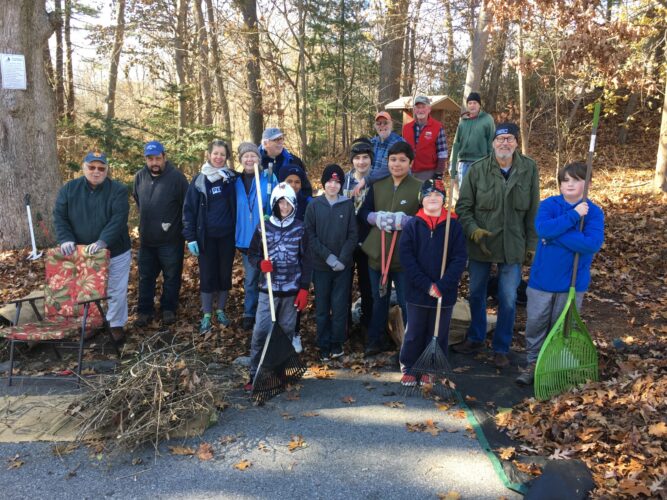
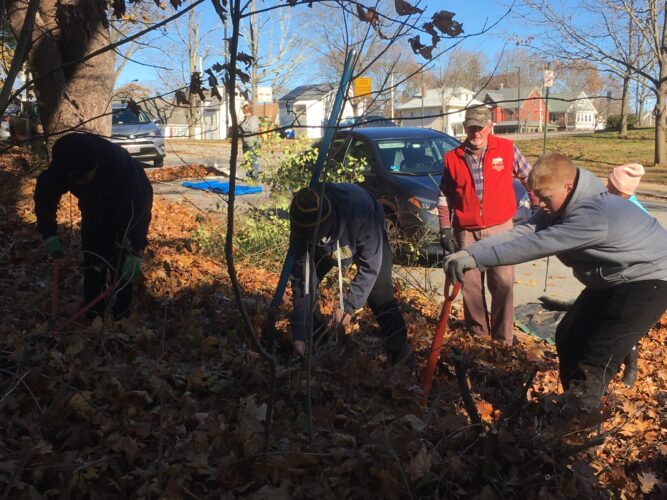
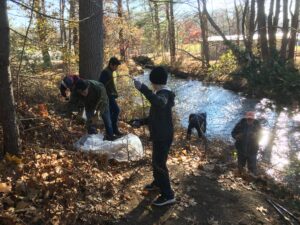
A survey of the preserve was conducted by Gary Krofta and Phil Boucher, resulting in a map identifying the invasive species to be targeted and their locations.  Longtime watershed protection advocate Don Doucette has been a key advisor.  The project was kicked off on Saturday, November 23.  Among the volunteers who pitched in was a contingent of Scouts from Attleboro Troop 15.

A good turnout of volunteers helped to remove invasive plant species at Larson Woodland on November 23, 2019.    Image credit: C. Adler

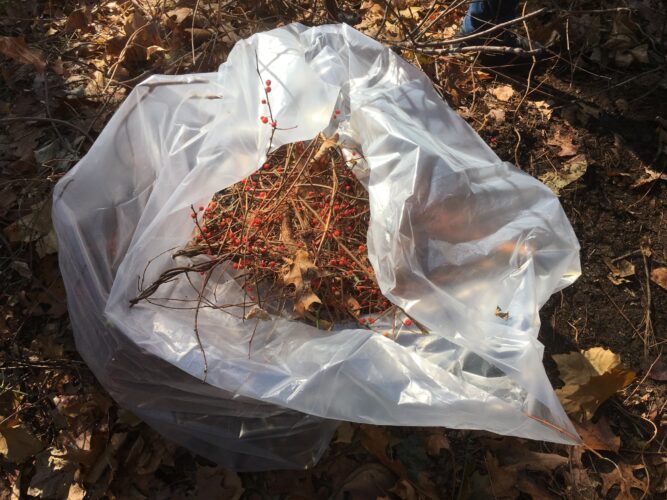
Oriental bittersweet was removed from the banks of the Ten Mile River near the spillway.  The bright red berries (once prized for their decorative value during the winter holidays) were bagged and will be burned to prevent propagation of new plants.

Oriental bittersweet (Celastrus orbiculatus) is an invasive vine that originated in China.    Image credit: C. Adler

Some large non-native honeysuckle bushes along Riverbank Road were also removed.

Scouts from Troop 15 removing an invasive honeysuckle bush at Larson Woodland.    Image credit: C. Adler

Project work parties will continue in the spring.  Some of the other species to be targeted are buckthorn, purple loosestrife, and Norway maple.  We welcome more volunteers to help with the work.